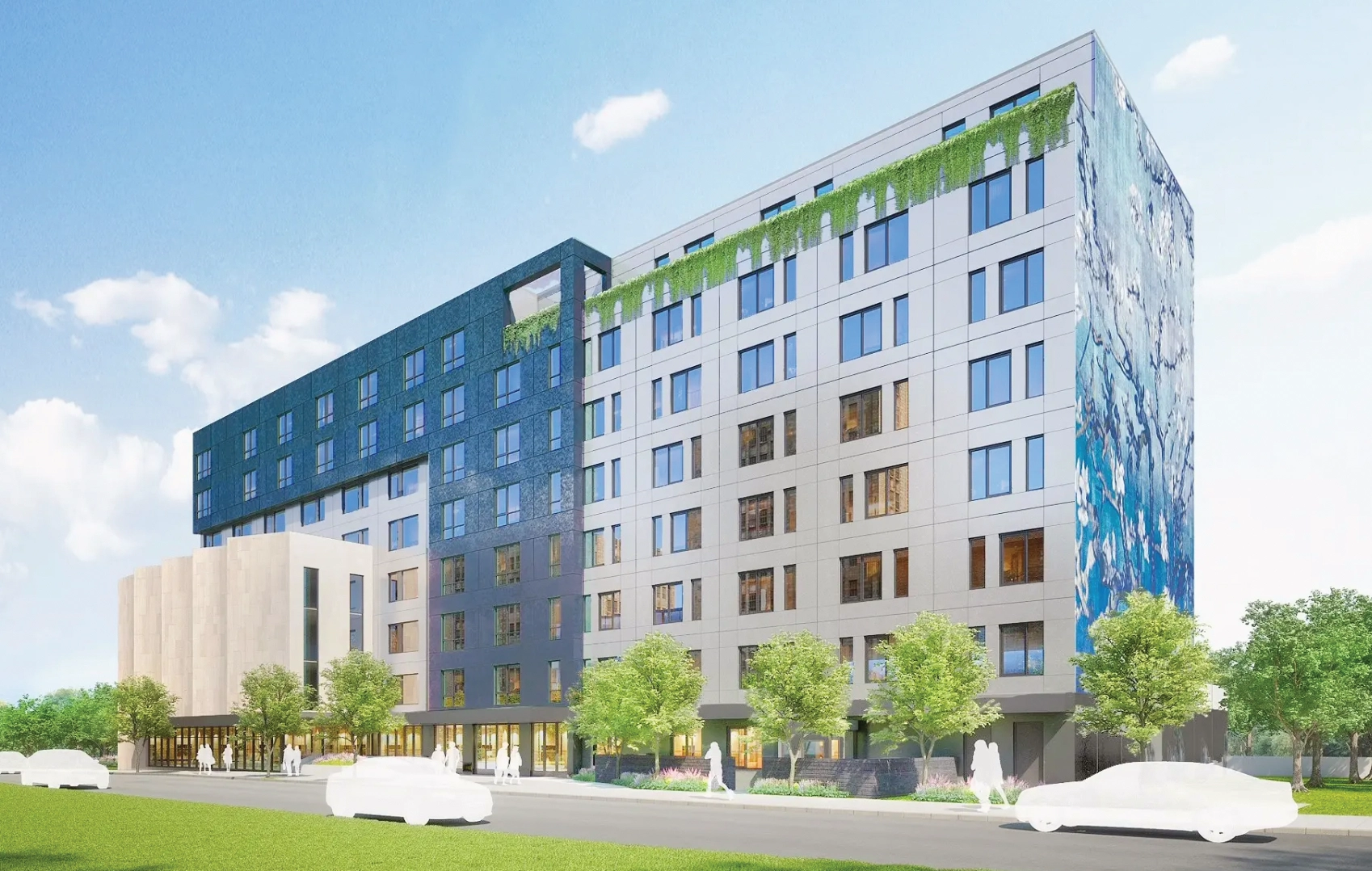
Construction begins on The Perennial, a $150M conversion of vacant Parkway Hospital into 145 affordable apartments in Forest Hills, Queens. The intergenerational project by Foxy Development and Selfhelp Realty Group includes senior housing and Forest Hills Jewish Center space, completing late 2027.
A joint venture between Foxy Development and Selfhelp Realty Group has secured financing and commenced work on The Perennial, a $150 million mixed-use project converting a long-vacant hospital building into 145 affordable apartments in Forest Hills, Queens. The development will occupy the former Parkway Hospital site at 70-35 113th Street, which has stood empty since 2008.
The intergenerational housing initiative targets senior residents while incorporating units for families across age groups, marking the neighborhood’s first deeply affordable senior-focused project. Forest Hills Jewish Center will relocate its operations to space within the completed building, adding community programming to the residential components and consolidating the institution’s presence after years of facility planning discussions.
Physical work involves gutting and reconfiguring interior spaces across the existing hospital structure, adding a two-story vertical extension atop the current building, constructing an eight-story tower on the north elevation, and building a four-story wing at the northwest corner. Structural reinforcements will support the expanded footprint and updated occupancy loads as the building transitions from medical use to residential density standards.
TD Bank originated construction debt while Community Preservation Corporation arranged permanent financing for the transaction. Newman Design leads architectural planning, with Cityscape Engineering handling structural systems, Suffolk Construction managing field operations, and Mottola Rini engineering mechanical and electrical infrastructure.
Completion is projected for late 2027, delivering housing inventory to a market where affordability pressures have intensified and senior-focused developments remain scarce in outer borough neighborhoods. Officials characterized the project as among the most complex public-private collaborations undertaken in recent city development activity, requiring rezoning approvals and coordination among religious institutions, nonprofit housing operators, and private developers.
The transformation addresses both immediate housing needs and longstanding neighborhood concerns about the deteriorating hospital property that has sat dormant for nearly two decades.