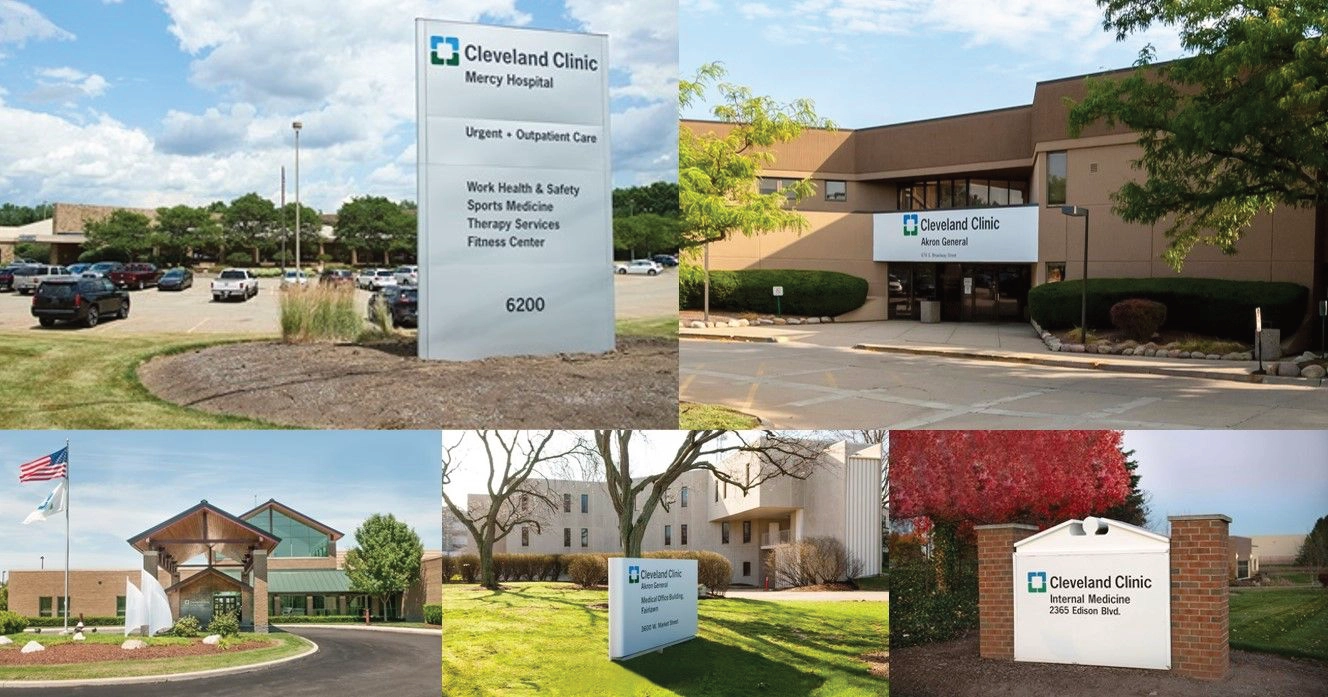
Cleveland Clinic is selling and leasing back 24 facilities in Ohio and Florida, transferring ownership to MedCraft while continuing operations. The deal is unlocking capital, reshaping its real estate strategy, and generating tax benefits for communities without disrupting healthcare services.
In Northern Ohio and Florida, a major real estate transaction is unfolding as Cleveland Clinic is selling and leasing back 24 facilities to MedCraft HealthCare Real Estate. The transfer is marking one of the largest healthcare real estate sale-leasebacks in Greater Cleveland’s history. While operations inside the buildings are continuing, ownership of the land and structures is shifting to a for-profit entity that is specializing in healthcare properties.
The practice of sale-leaseback is allowing institutions like Cleveland Clinic to unlock capital that is tied up in their real estate. By transferring ownership to MedCraft, the Clinic is continuing to occupy the facilities while redirecting funds to expansion projects and rising construction costs. In this instance, the arrangement is aligning with broader trends in health systems that are managing large-scale capital projects while facing higher-than-expected budgets.
The 24 properties being sold and leased back are including 20 in Northern Ohio and four in Florida. Among them is the 95,000 SF Westlake Medical Campus Building A on Clemens Road and a series of outpatient and community health centers across the region. Some facilities are hosting Cleveland Clinic operations directly, while others are occupied by affiliated but independent groups such as Akron General Medical Center and Partners Physician Group.
Cleveland Clinic officials are emphasizing that this transaction is not affecting patient care or access. Long-term leases are being signed, guaranteeing continuity of operations. However, the shift of ownership into taxable, for-profit hands is potentially bringing changes to local communities. Properties once owned by a tax-exempt institution are becoming sources of property tax revenue, creating new streams for local governments and school districts.
The timing of the transaction is occurring alongside Cleveland Clinic’s ongoing expansion program. Announced in 2022, the program is budgeting $1.3 billion for projects across Cleveland and beyond, including a $1.1 billion Neurological Institute rising on Carnegie Avenue, a $340 million expansion of Avon Hospital, and a $150 million expansion at Fairview Hospital. These projects are continuing to advance, but their costs are exceeding original projections. By shifting part of its portfolio into a lease model, the Clinic is seeking to manage expenses and preserve capital.
The buyer, MedCraft HealthCare Real Estate, is headquartered in suburban Minneapolis and is focusing exclusively on healthcare real estate. The company has been partnering with health systems nationwide for more than four decades, overseeing more than $3.5 billion in development, financing, and property management. In this sale-leaseback, MedCraft is structuring ownership through separate corporate affiliates, each tied to an individual property, and is securing financing through Capital One for more than $350 million.
For Cleveland Clinic, the deal is representing a recalibration of its real estate strategy rather than a retreat. The majority of its 82,000 employees are continuing to work out of its Cleveland Main Campus and other owned facilities. The sites included in the transaction are representing only a small portion of its total footprint. Still, by transitioning these assets into a long-term leasing model, the Clinic is signaling a willingness to reshape its approach to property ownership in order to sustain growth and balance financial demands.
As health systems across the United States are confronting rising costs, evolving patient needs, and competitive markets, transactions like this are becoming more common. The Cleveland Clinic deal is underscoring how real estate is functioning as both a financial tool and a community anchor. Buildings that once represented long-term institutional ownership are becoming instruments for capital management while still serving patients daily.